
Ballistic Resistant Window Film in Phoenix: Protecting Schools and Critical Facilities

Phoenix-area schools, government buildings, and commercial properties face real glass vulnerability threats. The C-Bond BRS system delivers UL 752-certified ballistic resistant window film in Phoenix — protecting students, staff, and building occupants without replacing windows or disrupting operations. Serving all of Maricopa County.

The Threat Is Real: Why Phoenix Schools Need Stronger Glass

Maricopa County is home to more than 57 school districts serving hundreds of thousands of students from Phoenix and Scottsdale to Chandler, Mesa, Tempe, and Gilbert. Every one of those campuses has something in common: glass. Windows, lobby walls, entrance vestibules, gymnasium facades — all represent the most physically vulnerable surfaces on any school building.

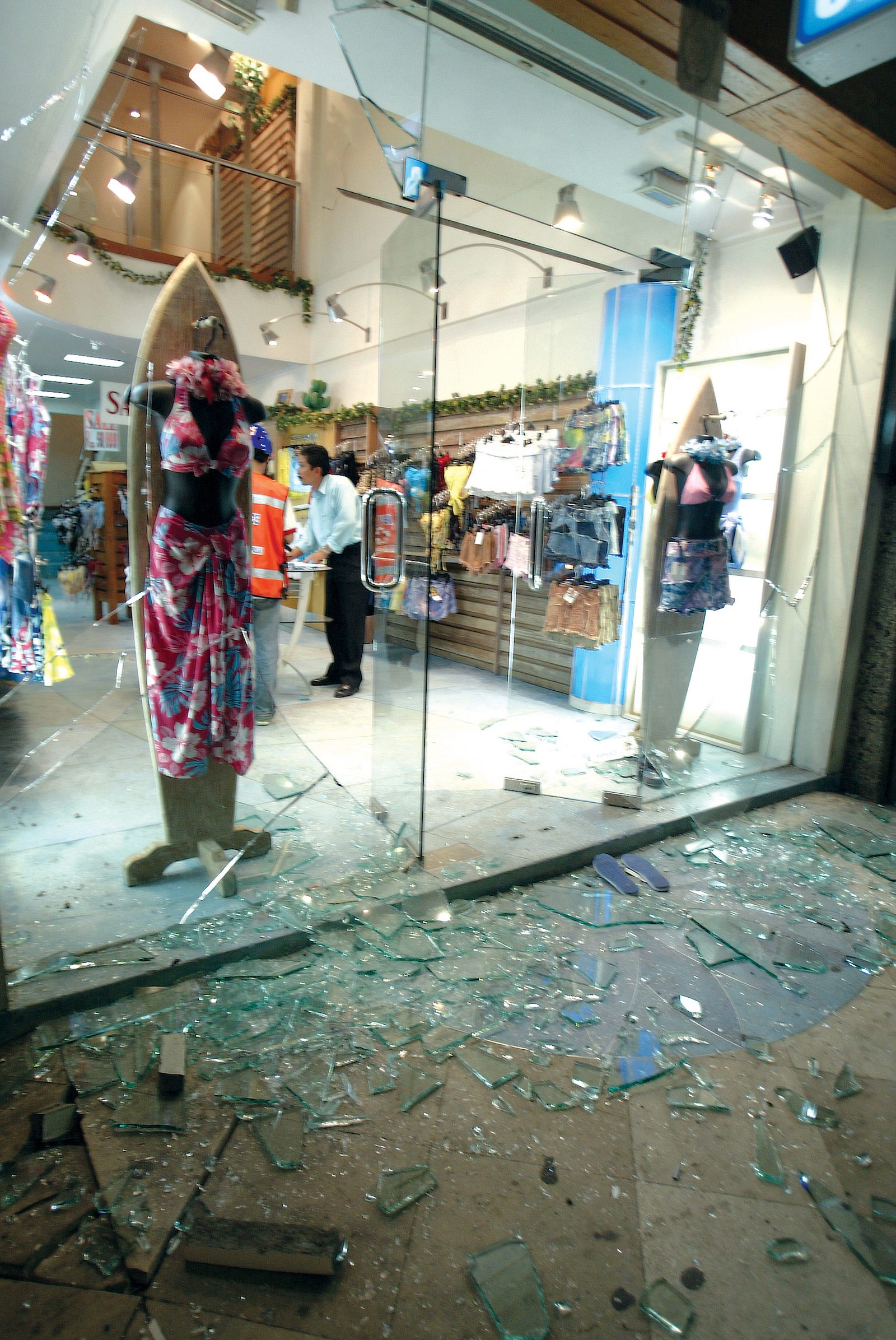
Glass fails instantly under impact. When an ordinary pane is struck by a projectile, it shatters outward and inward, creating high-velocity shards that cause severe secondary injuries. For students and staff in classrooms, hallways, or lobbies near exterior glass, this fragmentation hazard is as dangerous as the initial threat itself.

Ballistic resistant window film in Phoenix directly addresses this vulnerability. Applied to existing glass and bonded with a structural primer, it transforms standard panes into high-performance impact-resistant barriers without replacing windows or disrupting the school day. Arizona's Safe Schools Act requires districts to develop comprehensive emergency preparedness plans — and physical hardening of glass is one of the most cost-effective components a facility manager can implement.

  • 57+ Maricopa County school districts — all with glass exposure at main entry points
  • Arizona's Safe Schools Act — mandates documented emergency preparedness and physical hardening plans
  • Instant fragmentation risk — ordinary glass fails within milliseconds of impact
  • Retrofit solution — no window replacement required, no school closure needed

How Ballistic Resistant Window Film in Phoenix Works

The C-Bond BRS system is more accurately described as an impact protection system than a simple window film. It combines two technologies: a nanotechnology glass primer and a thick multi-layer polyester security film. Together, these components create a performance profile that far exceeds what either product achieves independently.

The C-Bond Primer Layer

C-Bond primer is applied directly to the glass surface before the film. Unlike standard adhesive films that sit on top of glass, C-Bond penetrates into the microscopic silica structure of the glass, filling micro-fractures and restructuring molecular bonds into a web-like matrix. This process increases the glass's inherent tensile strength and flexibility at the nano level — meaning the glass itself resists cracking under stress before the film ever comes into play.

The Security Film Layer

The film applied over the primed surface is a high-grade polyester laminate, typically 12–14 mil thick. It is tear-resistant and maintains its structural integrity even when the glass beneath it cracks. When struck, the film holds glass fragments together in the frame rather than allowing them to scatter. The result is a glazing unit that can absorb significant ballistic energy while keeping the window opening sealed.

  • Nano-level bonding — C-Bond primer restructures glass at the molecular level
  • 12–14 mil film thickness — far thicker than standard safety films
  • Fragment retention — cracked glass stays in the frame, not on the floor
  • Structural anchor — perimeter silicone ties the film-glass unit to the window frame

Learn more about the C-Bond window film product line available through Window Film Phoenix.

A School Safety Solution Phoenix Educators and Administrators Trust

School administrators and facility directors in the Phoenix metro area face a difficult balancing act: delivering the most protective environment possible while working within the constraints of capital budgets, board approval timelines, and the daily operational reality of a functioning school. Ballistic resistant window film in Phoenix is uniquely suited to meet these constraints.

Unlike laminated glass replacement — which requires structural work, extended closure, significant capital outlay, and board-level procurement processes — ballistic film installation is a straightforward commercial project. A crew of certified installers can protect an entire elementary school's entry vestibule, administrative wing, and first-floor classroom windows in a single summer break. There is no demolition, no construction dust, and no visible change to the building's appearance from the outside.

Why Phoenix-Area Schools Choose This Solution

Mesa USD, Chandler USD, Tempe Union High School District, and Deer Valley Unified all operate campuses where large glass surfaces are standard architectural features — lobbies, cafeterias, gymnasiums, and multi-story classroom buildings. For these districts, ballistic film offers a documented, UL 752-certified level of glass protection at a fraction of the cost of glass replacement. Arizona's K-12 school safety funding channels — including district bond measures and state emergency preparedness grants — are increasingly being directed toward infrastructure hardening projects like ballistic film.

  • No school closure required — installation during off-hours or summer break
  • Invisible to occupants — maintains natural light and classroom aesthetics
  • UL 752-certified performance — documented third-party tested protection levels
  • Bond and grant eligible — qualifies under Arizona school safety infrastructure programs
  • Complements existing security measures — works alongside cameras, access control, and SRO programs

What UL 752 Certification Means for Your Phoenix Property

When evaluating ballistic resistant window film for Phoenix schools or commercial buildings, the UL 752 standard is the benchmark that matters. Published by UL (Underwriters Laboratories), UL 752 establishes graded levels of bullet resistance for glazing materials. Each level corresponds to a specific caliber, velocity, and number of shots that the glazing must withstand without allowing complete bullet penetration through the specimen.

Protection Levels Relevant to Schools and Commercial Buildings

Most school safety specifications focus on UL 752 Levels 1 through 3, which address handgun threats. Level 1 provides resistance to .38 Special rounds. Level 2 resists 9mm rounds. Level 3 resists .44 Magnum rounds. For government buildings, financial institutions, and high-security commercial properties in the Phoenix metro, Levels 4 through 8 address rifle and higher-powered threats.

The critical advantage of the C-Bond BRS system over standard security film is precisely its UL 752 certification. Standard adhesive security film provides valuable fragment retention but does not achieve UL 752 ballistic resistance ratings. The C-Bond primer and structural anchor system are what elevate the combined system to documented ballistic performance. When a Phoenix school district's security director or a corporate facility manager specifies ballistic protection, UL 752 certification is the proof point that protects against liability and ensures the investment delivers what is promised.

  • UL 752 Level 1 — resists .38 Special
  • UL 752 Level 2 — resists 9mm handgun rounds
  • UL 752 Level 3 — resists .44 Magnum
  • C-Bond BRS certified — third-party tested and documented to UL 752 standards

The C-Bond BRS Advantage: Nanotechnology Meets Arizona's Climate

Not all ballistic film systems perform equally — and Phoenix's extreme desert climate creates performance demands that separate credible systems from inadequate ones. The C-Bond BRS system was designed with durability in demanding environments at its core, and Arizona's conditions — 115°F summer temperatures, intense UV radiation, extreme thermal cycling between day and night — are not obstacles for this system. They are, in fact, favorable conditions for one of its most important performance attributes.

Thermal Performance in Phoenix Heat

The structural anchor system that ties ballistic film to the window frame is a perimeter bead of structural silicone applied around all four sides of each pane. In Phoenix's warm, dry climate, this anchor cures quickly and reliably — typically reaching full strength within 24 to 48 hours, compared to 48 to 72 hours in cooler, more humid climates. This means a Phoenix installation can be commissioned and returned to full protection status faster than the same project in a northern climate.

The C-Bond primer itself is formulated for long-term adhesion stability across a wide thermal range. Unlike adhesive films that can delaminate or develop adhesion failures under repeated thermal cycling, C-Bond's molecular bond with the glass surface is not affected by temperature extremes. Phoenix building managers can expect 15 to 20 years of stable performance from a properly installed C-Bond BRS system.

  • Heat-stable formulation — performs reliably at Phoenix's 115°F+ temperatures
  • Fast anchor cure — dry Arizona climate accelerates structural silicone cure to 24–48 hours
  • UV-stable film — resists degradation from Phoenix's intense solar radiation
  • 15–20 year service life — long-term protection without film replacement

Benefits Every Phoenix School Administrator and Facility Manager Should Know

When a school district's facilities director or safety coordinator evaluates ballistic resistant window film for Phoenix campuses, the conversation quickly moves beyond the headline protection claim to practical operational questions: How disruptive is the installation? What does it look like from inside the classroom? Does it affect natural light? What happens if a window needs to be replaced? These are the right questions, and the answers support the case for ballistic film strongly.

Installation is a commercial window film project — skilled technicians, not construction crews. A single-story elementary school can typically be completed in three to five days. A multi-story high school or large campus may take one to two weeks, almost always schedulable during summer break or extended holiday closures. Classrooms are accessible and ready for students the following school day in most cases.

The Full Benefit Picture for Phoenix Schools

  • UV Blocking (99%+) — Reduces UV radiation reaching students seated near windows; protects classroom furnishings and flooring from fading in Phoenix's intense sunshine
  • Solar Heat Rejection — Reduces cooling load on HVAC systems, contributing to energy savings in Phoenix's long cooling season
  • Shatter Protection — Protects against accidental breakage as well as intentional threats — flying sports equipment, storm debris, vandalism
  • Aesthetically Neutral — Virtually invisible from inside; minimal visible light transmission change
  • Insurance Recognition — Some commercial liability insurers recognize glass hardening as a documented risk reduction measure
  • Durable — Low maintenance, no special cleaning requirements

Explore our Schools and Universities window film solutions for the full range of options available for Phoenix campuses.

Beyond Schools: Commercial and Government Applications Across the Valley

The same ballistic resistant window film that protects Phoenix school districts is equally appropriate for a broad range of commercial, government, and institutional properties across the metro area. Maricopa County's rapid growth has brought a substantial inventory of large glass-facade commercial buildings, government service centers, and institutional facilities that present similar glass vulnerability profiles as schools — and similar security requirements.

Government facilities in Phoenix, Scottsdale, Tempe, and Mesa — including courthouses, DMV offices, utility company service centers, post offices, and social services buildings — serve the public in high-volume, often emotionally charged environments. Financial institutions including banks, credit unions, and payday loan centers operate with known elevated risk profiles. Religious institutions with large glass facades and regular public gatherings represent another significant application category across the Valley.

High-Priority Commercial Applications in Phoenix

  • County and municipal government buildings — courthouse lobbies, permit offices, county service centers
  • Financial institutions — bank branches, credit unions, check cashing locations throughout Maricopa County
  • Houses of worship — churches, temples, mosques, and community centers with glass entry walls
  • Healthcare facilities — hospital emergency department entries, urgent care lobbies, psychiatric facility glazing
  • Valley Metro facilities — transit stations, park-and-ride facilities, light rail stations
  • Corporate campuses — Scottsdale's office corridor and Tempe Town Lake's tech and financial campuses

For an overview of our full commercial security film capabilities, visit our Safety and Security window film page.

Professional Installation in Phoenix: What to Expect

Ballistic resistant window film installation is a skilled trade requiring specific training, tools, and experience with structural anchor systems. It is not a project suited to general window film contractors without ballistic film credentials. Window Film Phoenix's installation crews are trained and experienced with the C-Bond BRS system, including the critical structural anchor application that is the difference between a standard safety film and a UL 752-certified ballistic system.

The Phoenix Installation Process

Every ballistic film project begins with a site assessment. Our technicians evaluate glazing type (annealed, tempered, insulated unit, or existing laminated glass), frame material and depth, window dimensions, and accessibility. This assessment determines the appropriate film specification, the anchor system design, and the project timeline. Phoenix commercial and institutional clients receive a written proposal detailing film specification, UL 752 protection level, anchor system design, and transparent pricing before any commitment is required.

Installation is performed wet — each pane is thoroughly cleaned, film is cut to precision dimensions, applied with a slip solution, and squeegeed smooth. The structural silicone anchor is then applied around the full perimeter of each pane. In Phoenix's dry desert climate, anchor cure time is typically 24 to 48 hours. Final inspection confirms full film adhesion and anchor integrity before project closeout.

  • Free site assessment — glazing type, frame specs, and threat level evaluated
  • Minimal operational disruption — most projects completed during regular business or school hours
  • Structural anchor applied — full perimeter sealant on every pane
  • 24–48 hour cure — Phoenix desert climate accelerates anchor strength
  • Post-install inspection — written confirmation of film and anchor integrity

Cost and Return on Investment for Phoenix Schools and Businesses

One of the most compelling arguments for ballistic resistant window film in Phoenix is the comparison to alternatives. Laminated safety glass — the traditional approach to bullet-resistant glazing — costs $150 to $400 per square foot installed, requires window frame modification, and demands construction-level project management. A full laminated glass upgrade for a typical Phoenix elementary school can exceed $500,000.

The C-Bond BRS film system achieves comparable UL 752 protection levels at a fraction of that cost, with no structural modifications to the building envelope and no specialized permitting. For Maricopa County school districts managing facilities capital budgets alongside competing priorities — HVAC systems, roofing, technology infrastructure — ballistic film delivers a dramatically better security investment per dollar.

Funding Sources Available for Phoenix Schools

Arizona school districts have multiple funding pathways for ballistic film projects. District general obligation bond measures regularly include line items for school safety infrastructure. The Arizona Department of Education's Safe Arizona Schools grants have funded physical security upgrades including glass hardening. Federal funding through the STOP School Violence Act (administered through the Bureau of Justice Assistance) provides grants specifically for school safety hardware including glass protection systems. Commercial property owners in Phoenix can often depreciate ballistic film as a qualified improvement property under federal tax code.

  • Fraction of laminated glass cost — comparable UL 752 protection at significantly lower investment
  • No structural permits required — installed like commercial window film
  • Arizona Safe Schools grants — state funding available for qualifying school districts
  • STOP School Violence Act grants — federal BJA funding for glass protection systems
  • Tax treatment — qualified improvement property for commercial buildings

Frequently Asked Questions About Ballistic Film in Phoenix

Phoenix facility managers and school administrators evaluating ballistic resistant window film for the first time typically have similar questions. Here are the most common ones, with direct answers.

Does ballistic film make glass bullet-proof?

No — the accurate term is bullet-resistant, not bullet-proof. The C-Bond BRS system is tested and certified to specific UL 752 protection levels, which describe the caliber, velocity, and number of shots the glazing resists without complete penetration. Beyond the certified level, the glazing will be damaged. The critical benefits are preventing complete penetration at the specified level and preventing dangerous glass fragment scatter at all impact levels.

Can it be applied to tempered glass?

Yes, with assessment. Tempered glass presents specific considerations because it shatters differently than annealed glass. Our technicians assess each window type during the site survey and specify the correct film and anchor system for the glazing type. Most commercial tempered glass is a suitable substrate for the C-Bond BRS system.

How long does it last in Phoenix's climate?

A properly installed C-Bond BRS system has a service life of 15 to 20 years in Phoenix's desert climate. The molecular bond between the primer and glass is heat-stable, UV-stable, and not affected by the thermal cycling between Phoenix's hot days and cooler nights. Cleaning is standard — the film can be cleaned with most non-abrasive glass cleaners.

  • Service life: 15–20 years in Phoenix's desert climate
  • Maintenance: Standard non-abrasive glass cleaners only
  • Warranty: Manufacturer warranty available — ask during site assessment
  • Visible change: Minimal — slight tint variation depending on specification

Technical Specifications and Resources for Phoenix Projects

For Phoenix school district procurement departments, architects, building engineers, and security consultants specifying ballistic film systems for Maricopa County projects, the following technical documents provide complete performance specifications, testing data, and product information for the C-Bond BRS system.

These documents are provided to support your specification and procurement process. The C-Bond BRS spec sheet details film construction, thickness, UL 752 certification levels, and installation requirements. The C-Bond Secure spec sheet covers the primer formulation, penetration depth, and adhesion performance data. The C-Bond System Performance Guide provides comprehensive system performance data including impact resistance, fragment retention, and environmental stability across temperature ranges relevant to Phoenix's climate.

For projects requiring formal specification documents or additional manufacturer data, contact our team directly. We support the specification process for Phoenix school district projects, including assistance with grant application documentation and procurement writing. Learn more about our Bomb Blast protection film — a complementary security film solution for Phoenix facilities.

Schedule Your Free Phoenix Ballistic Film Assessment

Protecting Phoenix schools, businesses, and government facilities from glass-based threats starts with an honest, no-cost site assessment. Window Film Phoenix's security film specialists serve the entire Maricopa County metro area, including Phoenix, Scottsdale, Tempe, Mesa, Chandler, Gilbert, Glendale, Peoria, Paradise Valley, Sun City, and all surrounding communities.

Every consultation includes a complete facility walkthrough, documentation of existing glazing specifications, a threat-level discussion tailored to your building type and location, UL 752 protection level recommendations matched to your actual risk profile, and a written proposal with complete material specifications, anchor system design, and transparent pricing. There is no obligation and no cost for the assessment.

Phoenix school districts, commercial property managers, and government facility directors who have completed ballistic film projects consistently report that the combination of documented UL 752 protection, minimal installation disruption, and cost-effectiveness relative to glass replacement makes it one of the most defensible security investments available per dollar spent. Whether you are protecting a single-entry vestibule at a Tempe elementary school or hardening the full perimeter glazing of a Scottsdale corporate campus, the right ballistic film specification is available at a price that fits a real-world security budget.

  • Free site assessment — No cost, no pressure, written proposal provided
  • UL 752-certified systems — Third-party tested to documented protection standards
  • Serving all of Maricopa County — Phoenix, Scottsdale, Tempe, Mesa, Chandler, Gilbert, Glendale, Peoria, and beyond
  • School district experience — Familiar with Arizona school procurement and grant documentation requirements

Contact us today to schedule your free ballistic film assessment in Phoenix.


Everything to Know About Ballistic Resistant Window Film in Phoenix

Addressing security needs is paramount for residents and businesses in Phoenix, particularly when exploring the benefits of safety measures like ballistic resistant…

Ultimate Guide to Ballistic Window Film in Phoenix

Ballistic window film in Phoenix is increasingly becoming a sought-after security enhancement for homes and businesses alike. In the bustling urban landscape…

Top Benefits of Ballistic Resistant Window Film in Phoenix

Ballistic resistant window film in Phoenix is a critical element in modern safety technology, strategically designed to offer a robust layer of…

Get a Quote